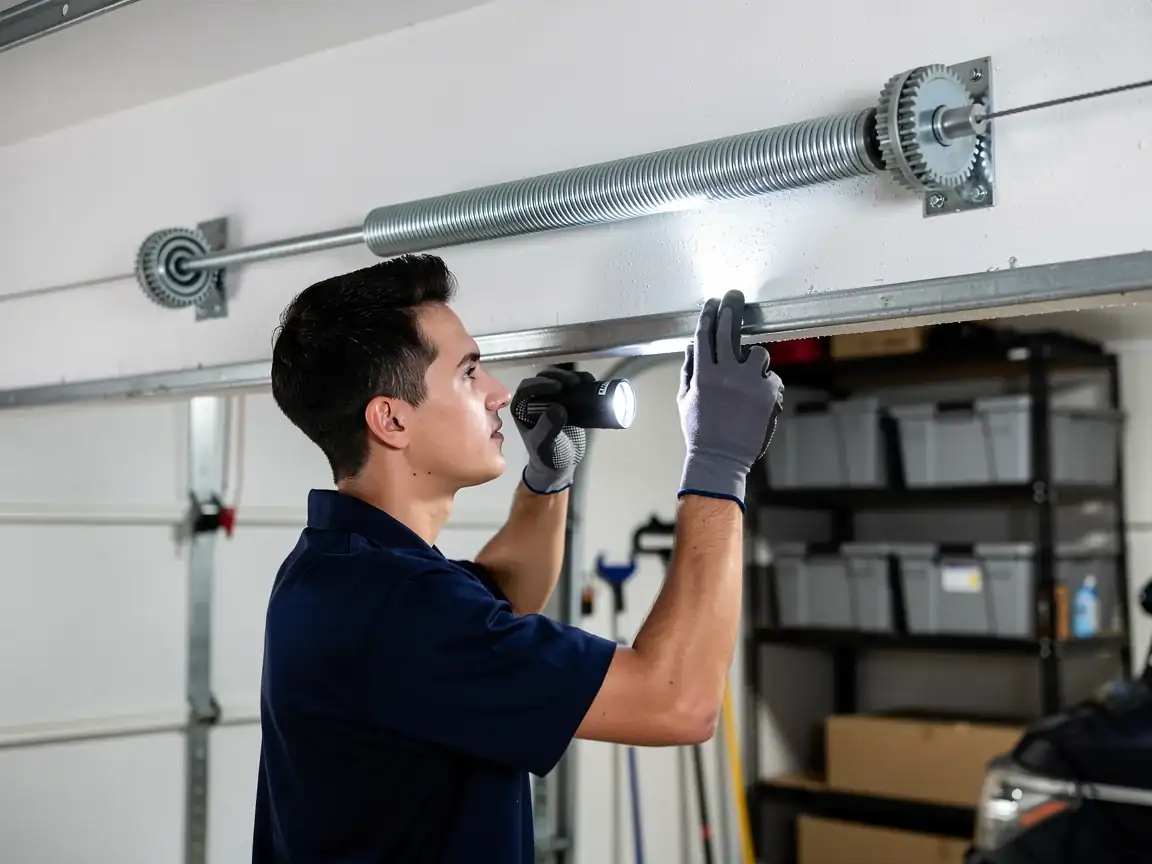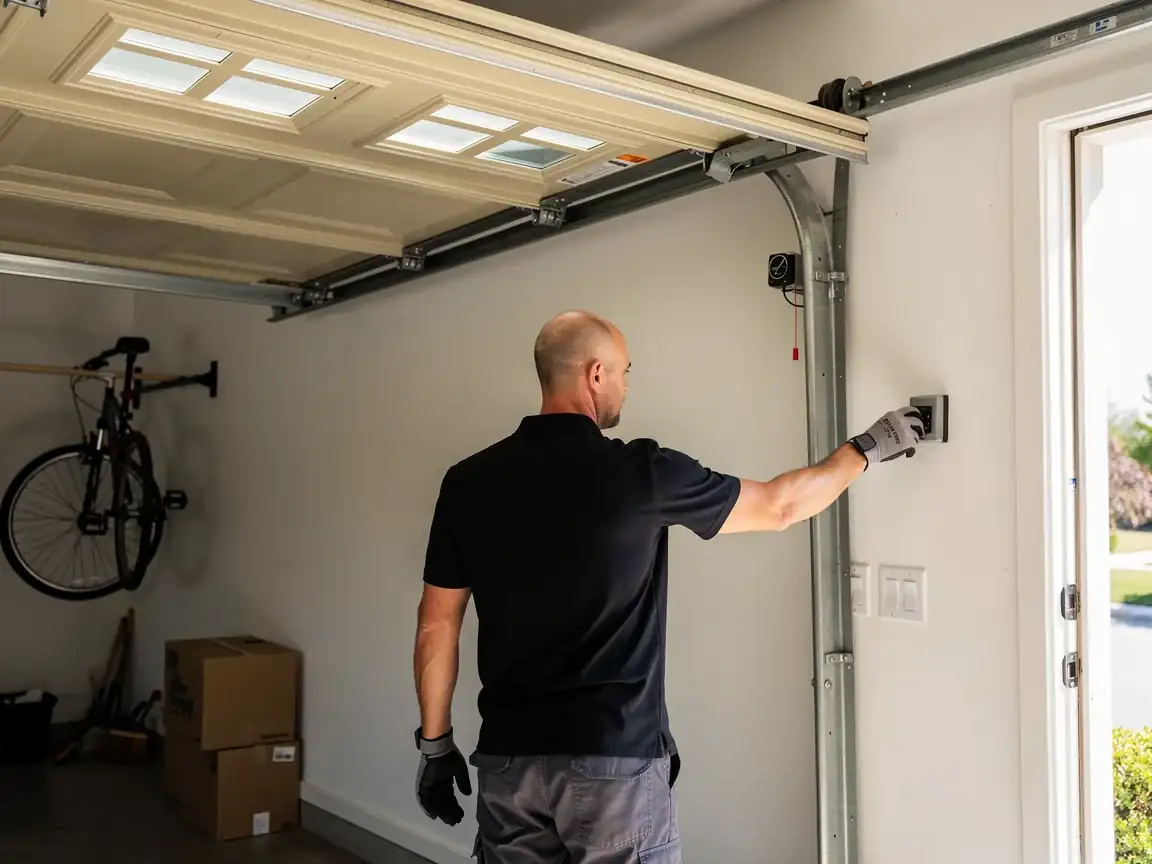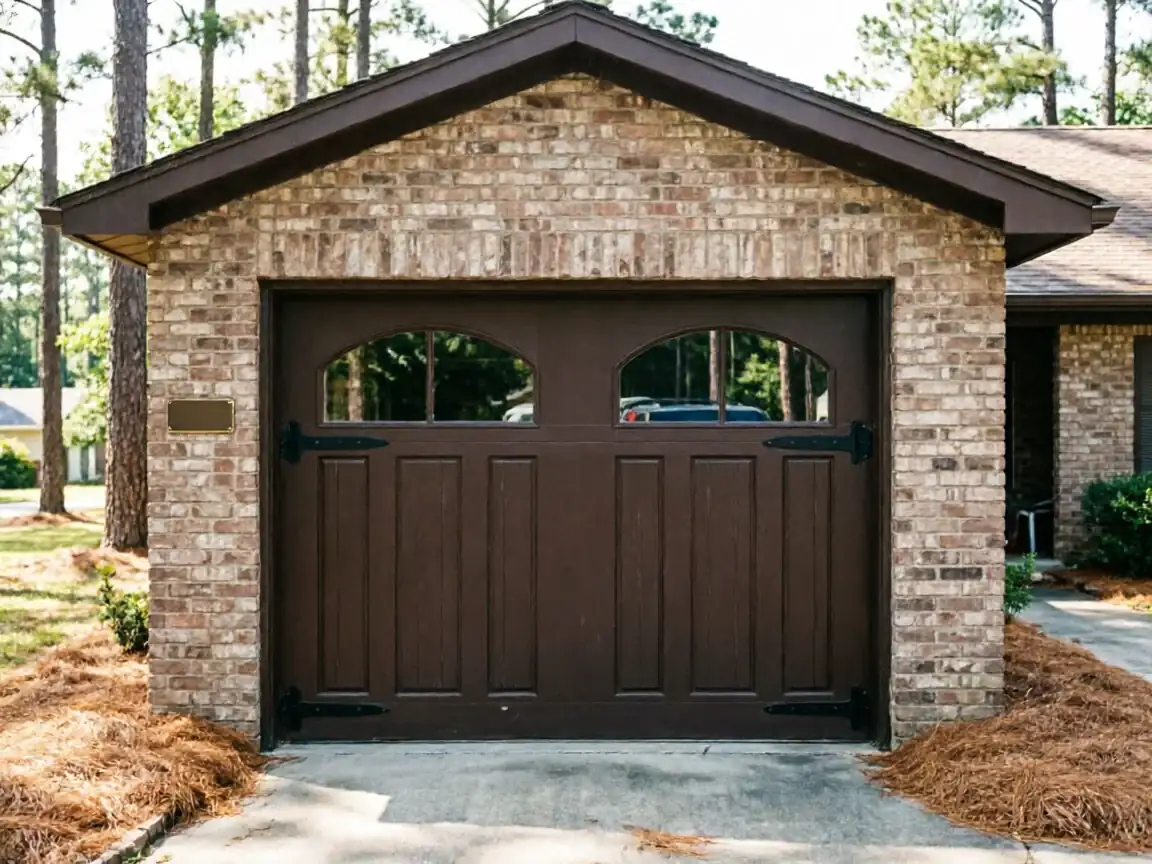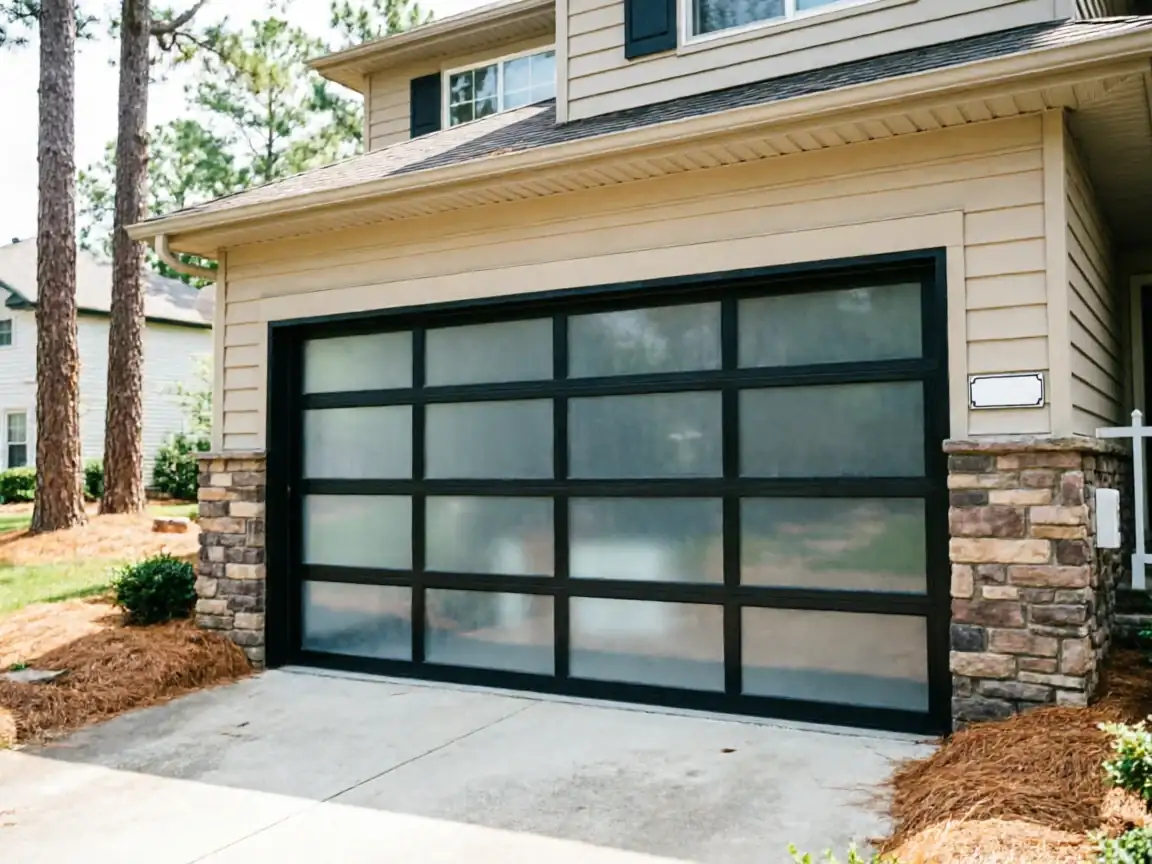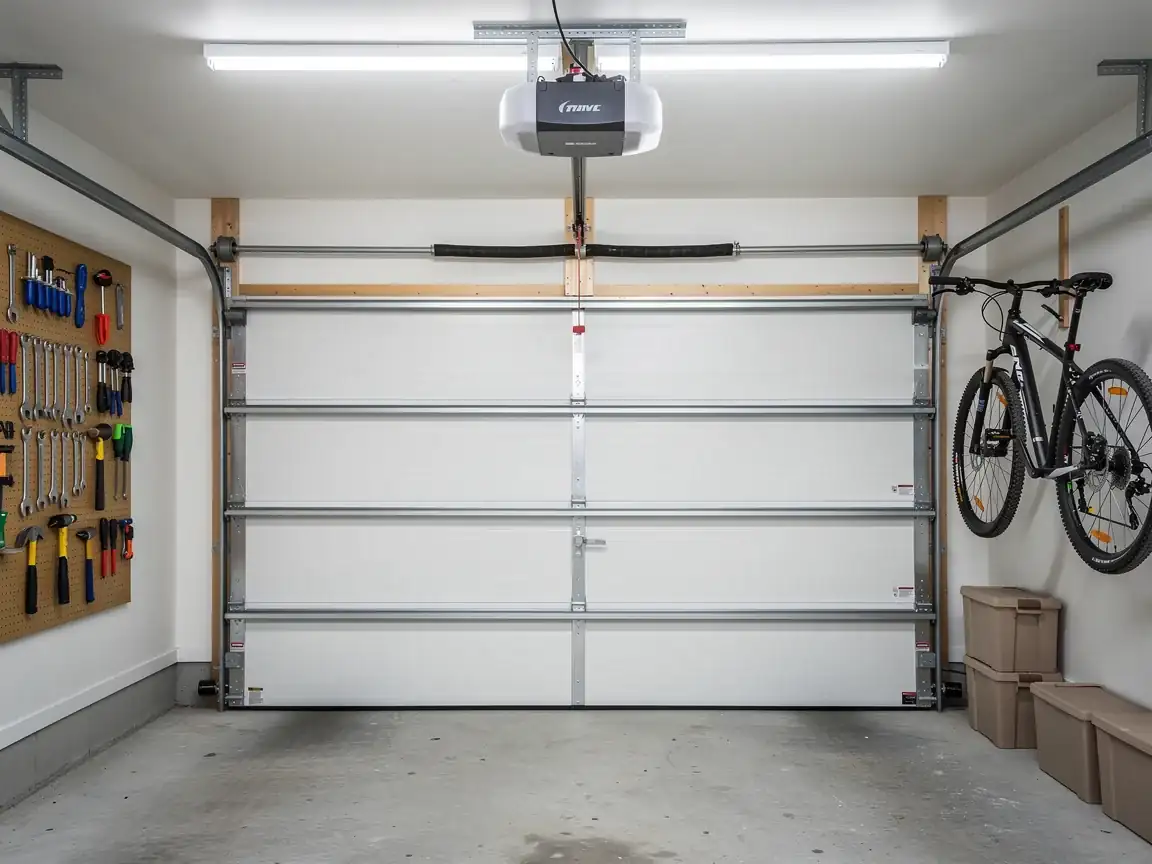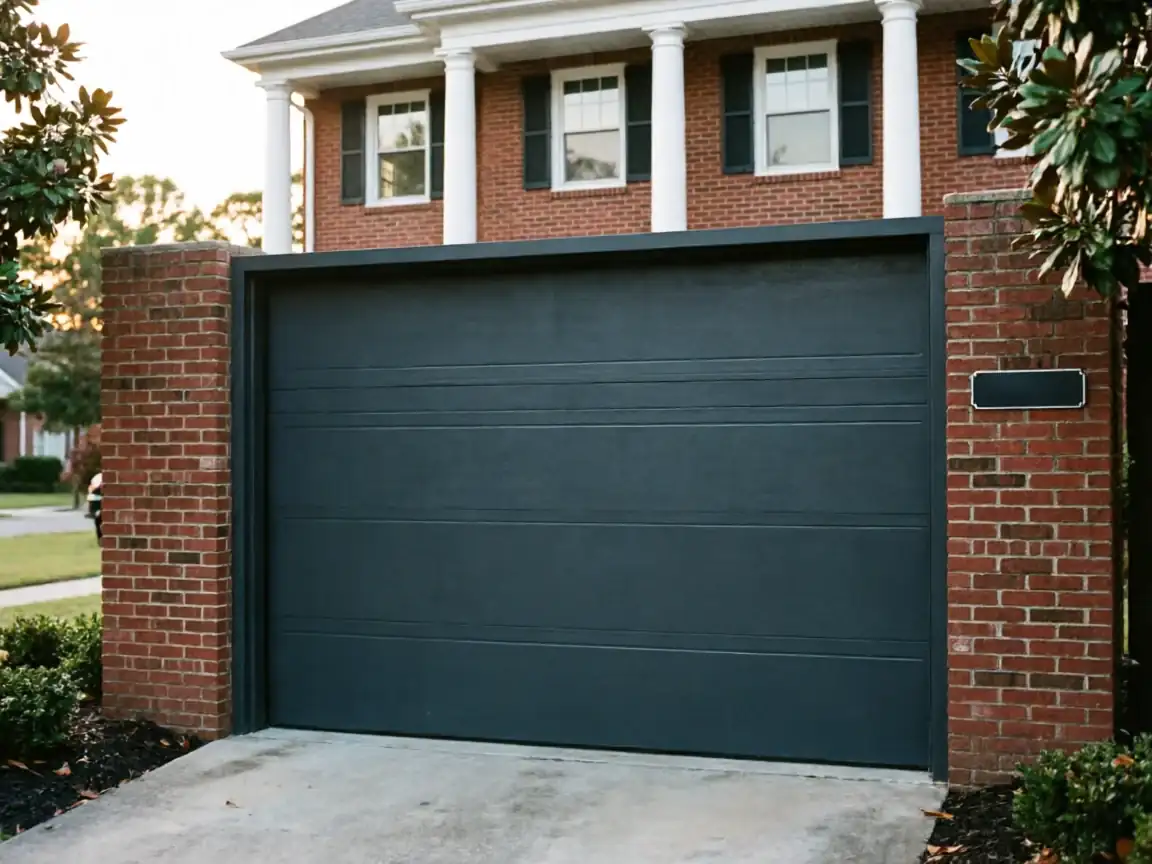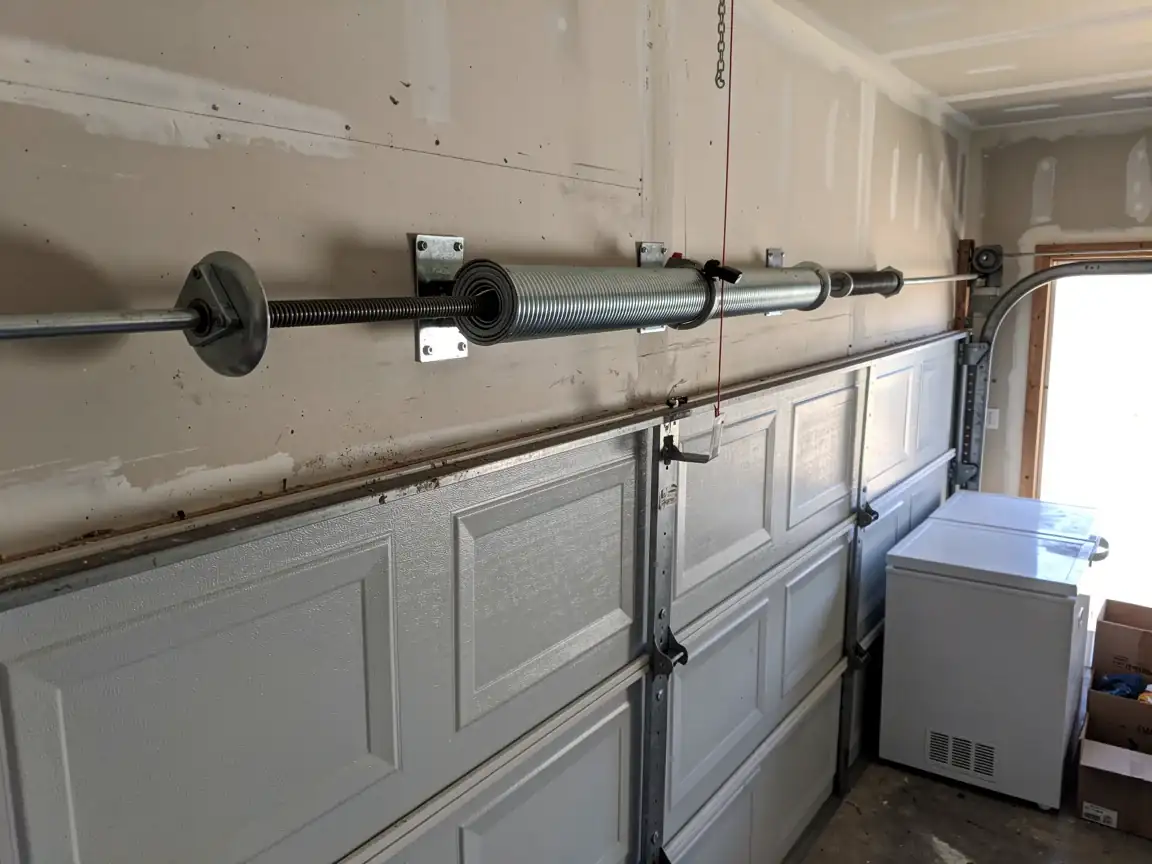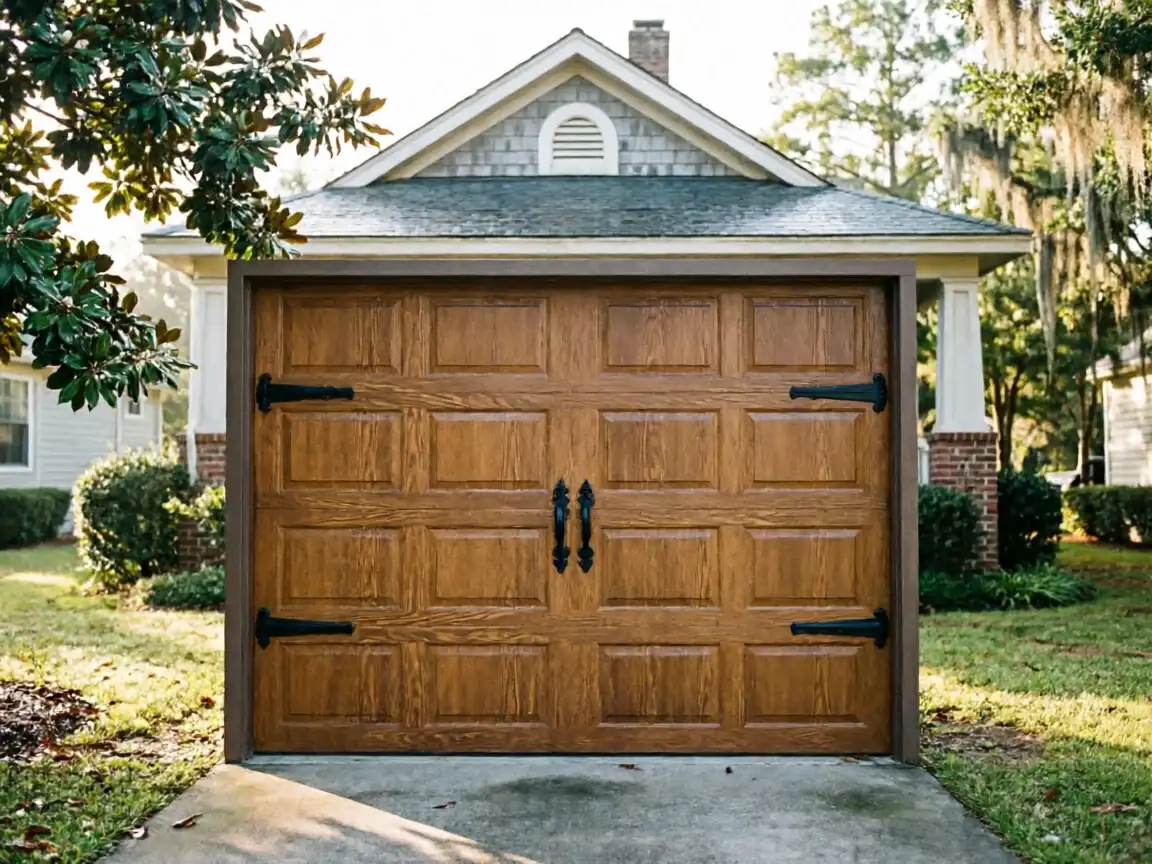
The Symptom
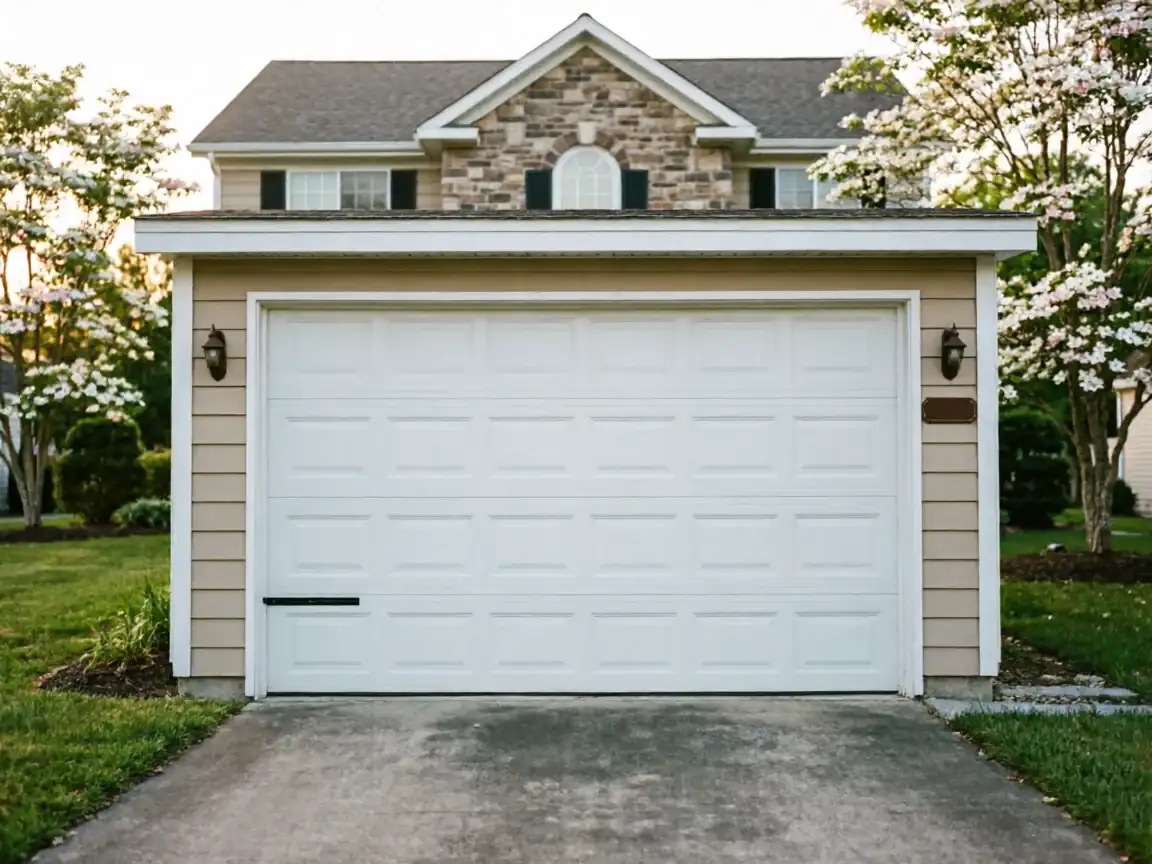
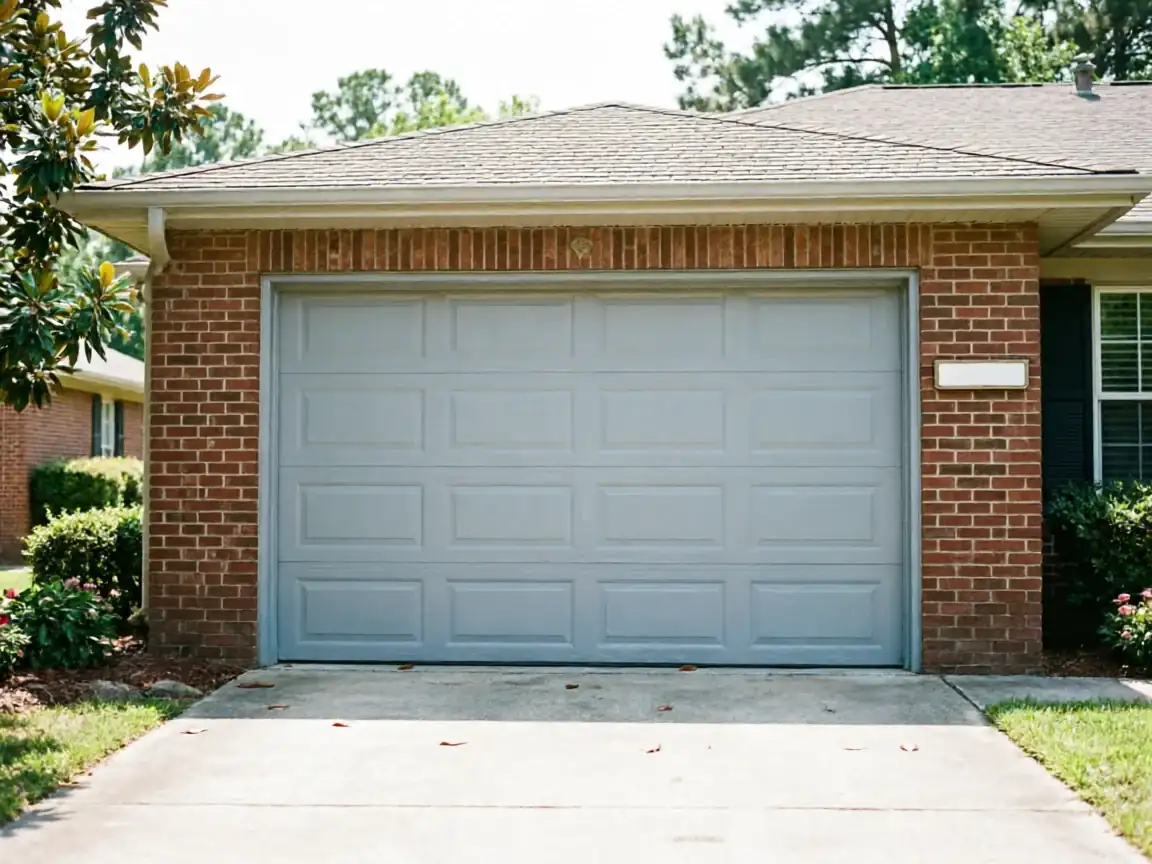
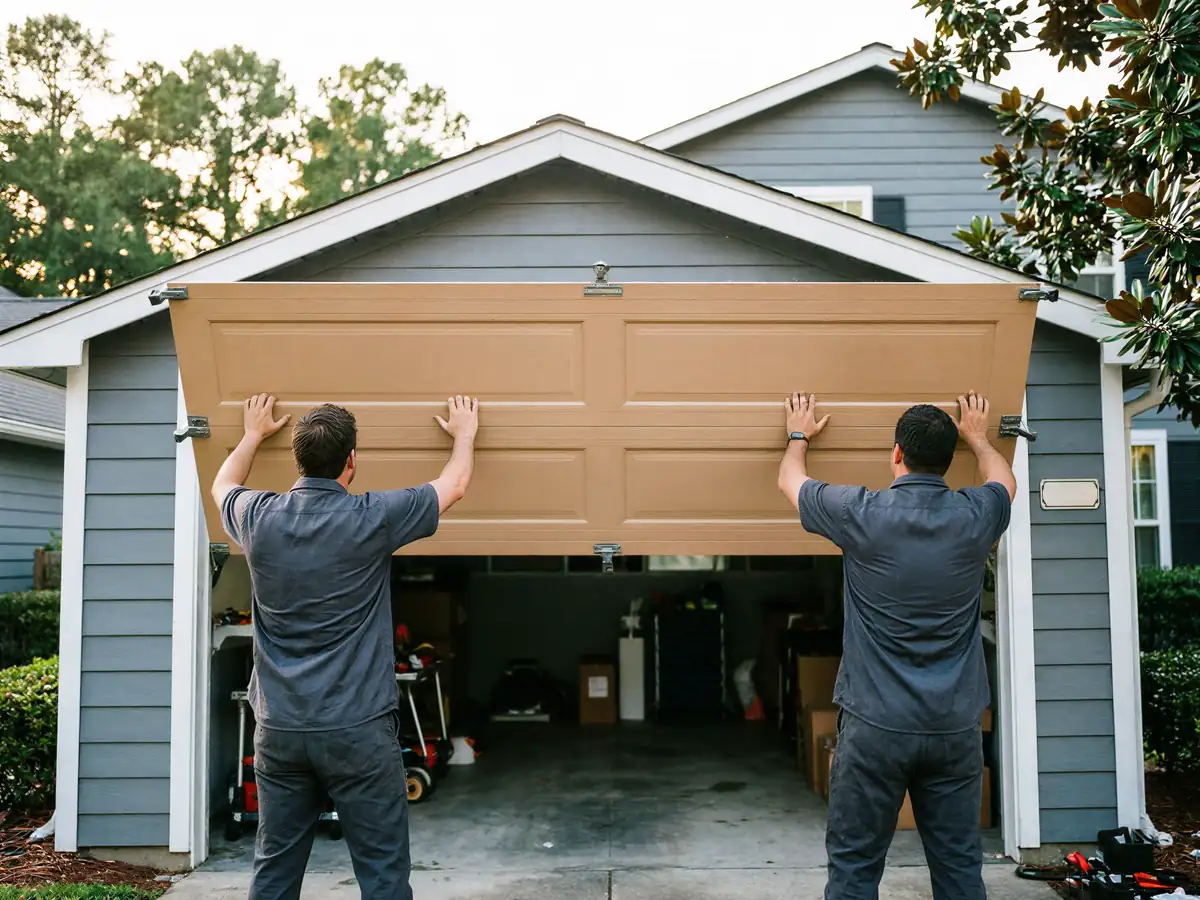
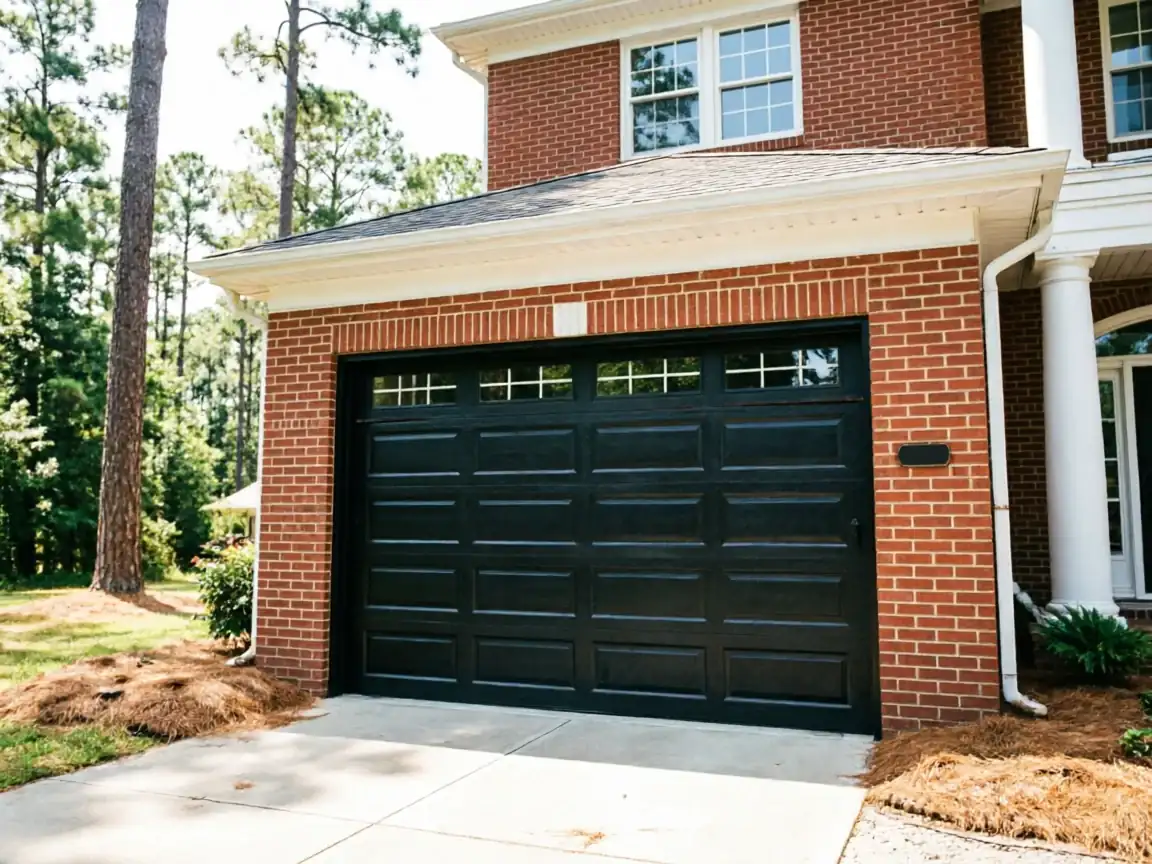
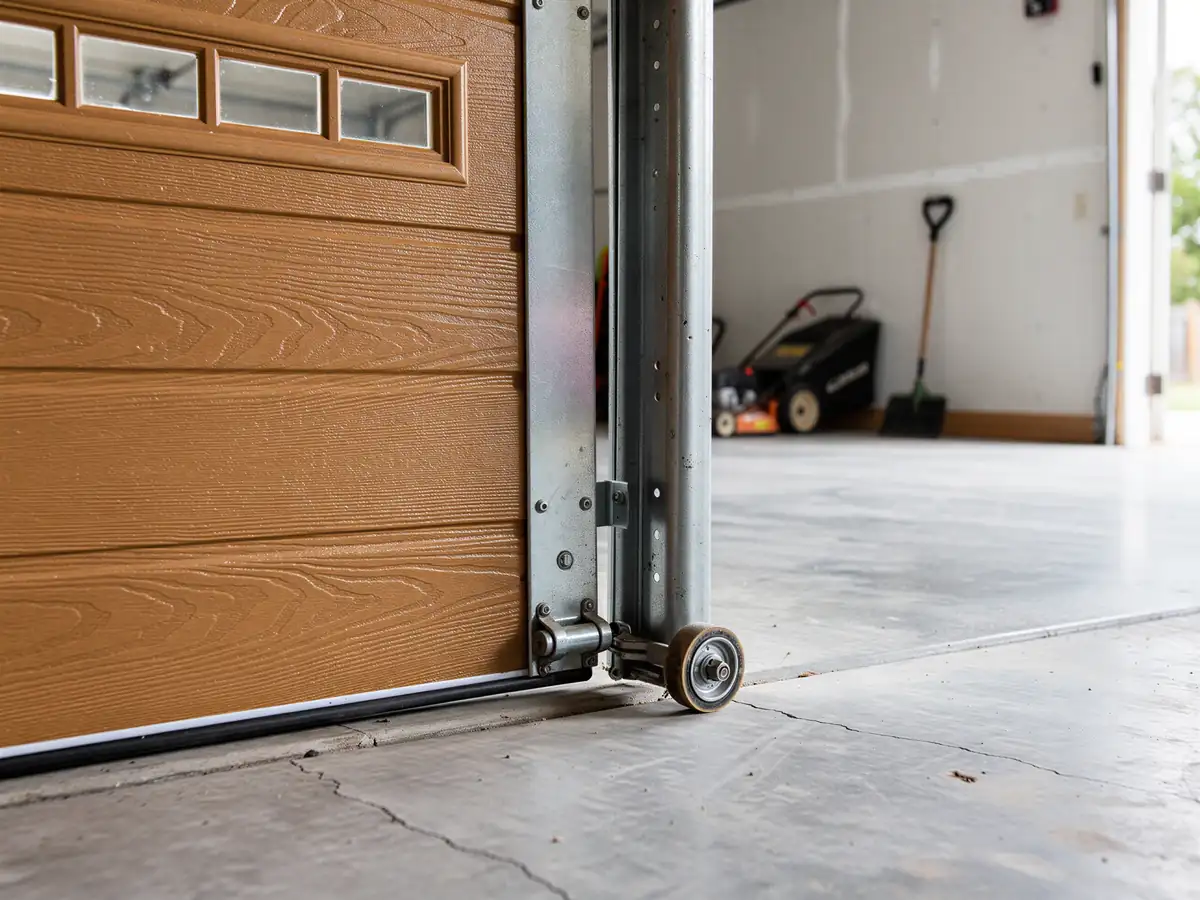
Across most of the Hinesville service area, houses went up between 1989 and 2005, with 1996 as the midpoint. Richmond Hill sits at the far end of that range, with a median build year of 2005 - call it a decade newer than a lot of what we work on day to day. That gap matters more than it sounds like it should. A dented or cracked panel on a 2005-era door usually means a steel skin with a foam core and a slimmer profile than the thicker, less-insulated panels common on older stock closer to Hinesville. The dent looks the same from the driveway. The fix is not. You'll see the same symptoms either way - a bowed section, a panel that's buckled from a backed-into car or a wind-caught gust, hinges pulling loose from a cracked seam - but the panel behind the dent is built differently depending on when the house went up, and Richmond Hill skews newer than the rest of the area we cover.
The Complications
Newer doors complicate replacement in a way people don't expect. A 2005-built door is more likely to carry a specific foam-core panel profile tied to a particular manufacturer run from that era, and matching one section to an otherwise intact door means sourcing the right panel, not just any panel that fits the track width. Mismatched panels show as a seam line or a color mismatch that never quite settles, even with fresh paint. We also factor in the area's mild climate with occasional freeze risk - it doesn't warp steel the way harsh freeze-thaw cycles do elsewhere, so panel failure here is almost always impact damage or age fatigue on the foam adhesive, not weather stress. That's one less thing working against the door, which is a small bit of good news when you're staring at a cracked panel.
Doing It Yourself
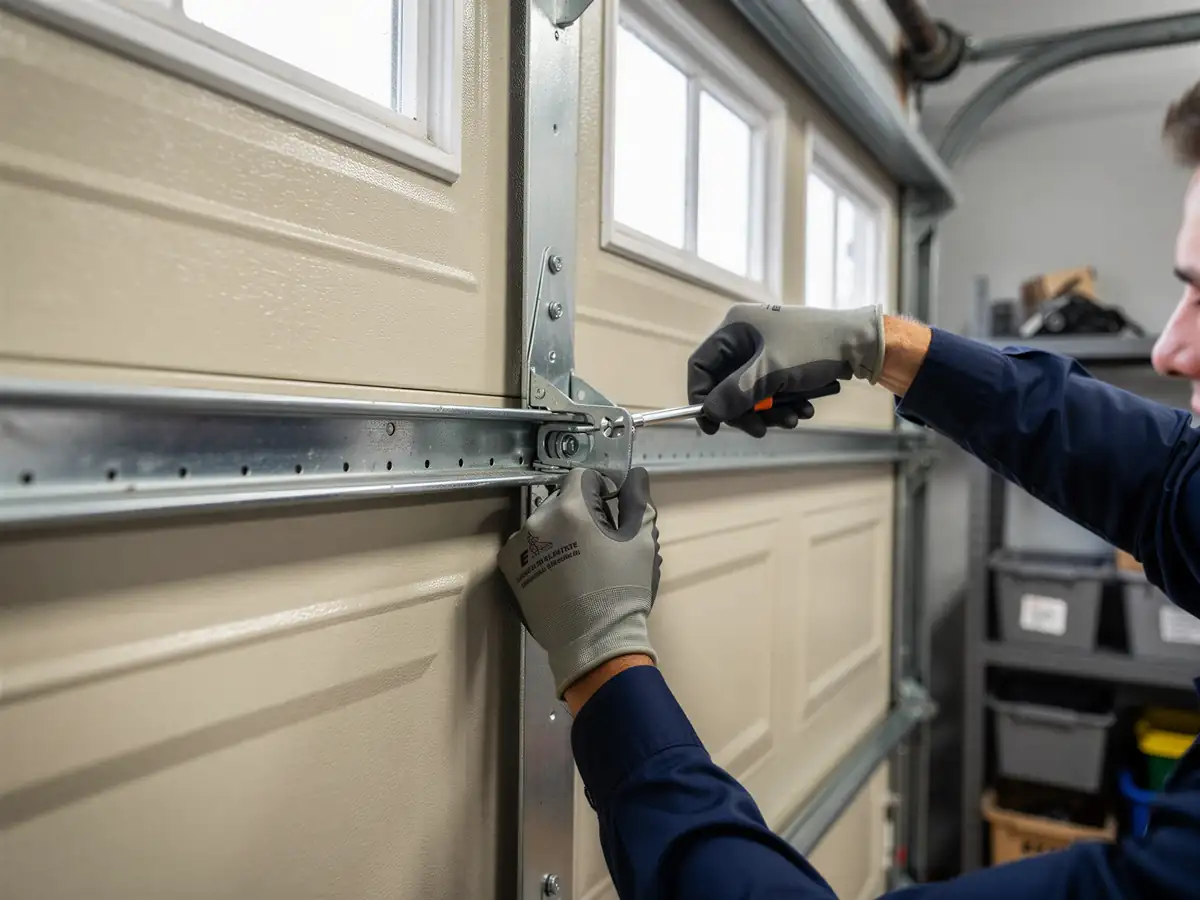
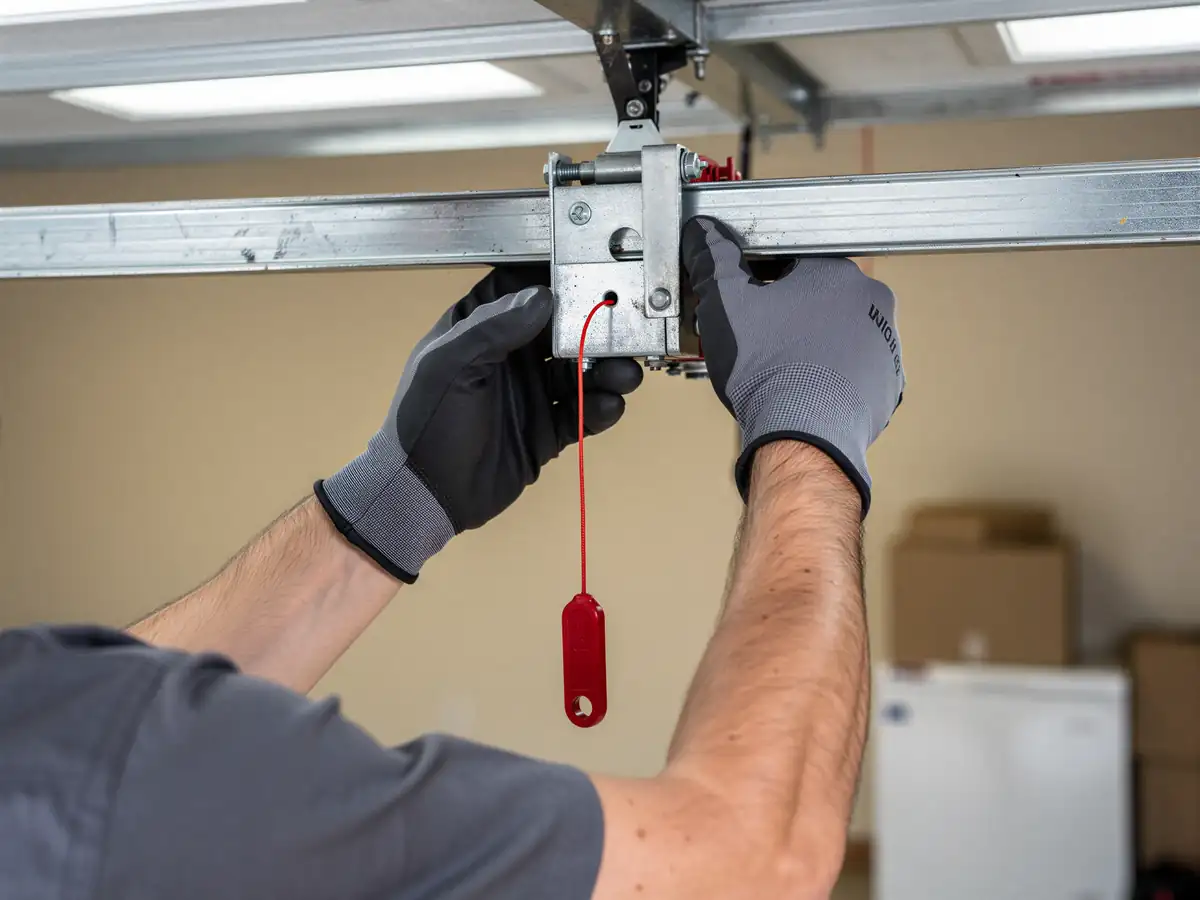
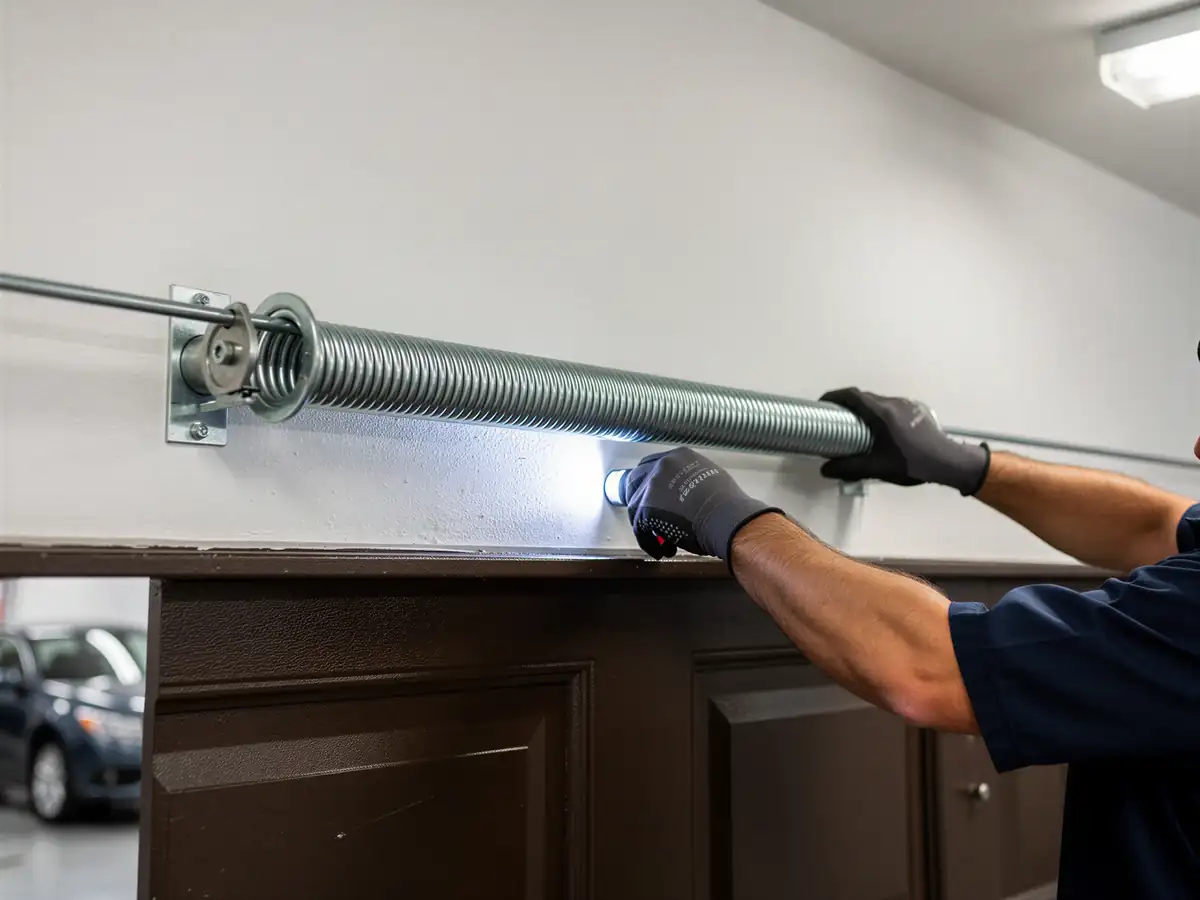
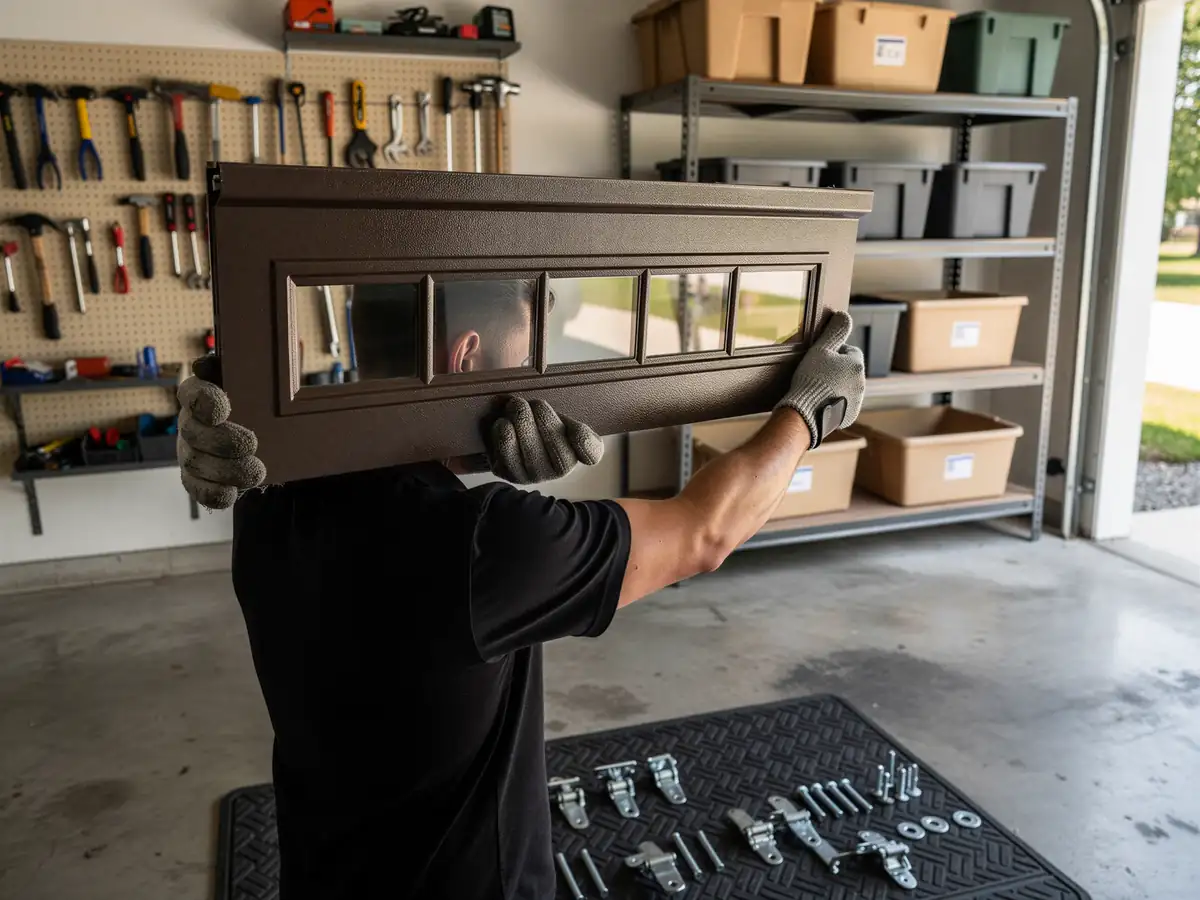
Swapping a single panel on a sectional door is within reach for someone comfortable with hand tools, if the door is unlocked from its spring tension properly and the replacement panel is an exact match. The honest limitation: on a 2005-era foam-core door, finding an exact matching panel without the original model number is hard, and a slightly-off replacement will bind on the rollers or leave a visible lip at the seam. If you don't have the door's model plate or a remaining spare panel to match against, we'd rather talk you through sourcing the right part first than have you install the wrong one.
How Long It Takes
A single-panel swap on a door that's structurally sound otherwise is usually a same-visit job once the correct panel is in hand - most of the time is in removing the damaged section cleanly without throwing the door's alignment off, then setting and squaring the new one. The wait is almost never the install; it's the part. Older or less common panel profiles can mean a lead time before the panel arrives, and since Richmond Hill's stock runs newer than much of the rest of the area, that can cut either way: newer runs are sometimes easier to match, sometimes a specific foam-core profile is harder to find than a plain older steel panel.